
When I first started researching how non-US residents could build strong foundations to do business in America, I kept coming across the concept of a limited liability corporation—better known as an LLC. The more I understood, the more clearly I saw why this structure makes sense for anyone dreaming of exploring business or protecting assets in the United States, regardless of citizenship or residency. There are many questions, though. What exactly is an LLC, and does it work for someone who has never set foot in the US? How remote can the process be? In this guide, I’ll walk you through what I’ve learned, from the basics to practical steps—and share resources, like safeitin.com, that can be genuine allies along the way.
What is a limited liability corporation?
Let’s start at the core. An LLC (limited liability company, often mistakenly called a limited liability corporation) is a business structure recognized in the USA that protects its owners from being personally responsible for business debts and lawsuits. Think of it as a legal wall between you and your company’s obligations.
With an LLC, your personal assets (like your home, car, or savings) are shielded if your business faces legal action or runs into financial trouble.
Unlike a corporation, an LLC offers flexibility in how you are taxed and run the business. You don’t need to be a US citizen or resident to set one up—which surprised me—and you aren’t even required to travel to the US or get a visa.
I learned from the U.S. Census Bureau analysis that more than 14% of American nonemployer business owners aren’t US citizens, and over 22% are foreign-born. LLCs are central to how many expats and global entrepreneurs participate in the US economy—without a physical US address.
Why do non-US residents choose LLCs?
From my experience and what I’ve read, the reasons go beyond liability protection:
- Clean separation of personal and business finances
- Flexible tax options: income can pass through to your personal tax bill (pass-through taxation) or you may elect corporate tax treatment
- No requirement for US citizenship or a Social Security Number (although you’ll need an ITIN or EIN; more about those soon)
- Remote formation possible; the process can be 100% online
- Easy to manage, with fewer corporate formalities and annual paperwork than a traditional corporation
- Helps establish US business credit, useful for those planning future investments or even moving to America one day
It all boils down to flexibility and access. For non-US residents, the LLC is, in my opinion, the most remote-friendly legal vehicle to tap into the US market or financial system, without extra hurdles.
LLC or ‘limited liability corporation’: clearing up the name
Before we move on, a quick side note. I’ve noticed people often confuse “limited liability company” (the proper legal term) with “limited liability corporation.” In the legal world, a corporation (C-Corp or S-Corp) has different rules—tighter regulations and stricter ownership limits. But in conversation, many people, especially outside the US, refer to both as a “limited liability corporation.”
So, if someone says they want a “limited liability corporation” in America, they probably mean an LLC.
Key benefits of forming an LLC as a non-US resident
Based on what I’ve seen, these advantages stand out the most.
Separate your assets. Limit your risk.
- Liability protection: Your liability is usually limited to what you put into the LLC. Your personal assets are safe from business lawsuits and debts.
- Remote setup: US law does not require a US address or visa to open an LLC. You can start and manage everything from abroad.
- Tax flexibility: You can choose how the IRS sees your LLC for tax purposes. It can be disregarded (where you report directly on your personal taxes), treated as a partnership, or even a corporation for tax purposes.
- Reputation and credibility: Operating under a US-registered LLC shows customers and partners that you are serious, potentially opening new markets and payment solutions.
- Credit building: Opening an LLC is often the first step in establishing a US credit history—which many online services, banks, and lenders require.
- Managed remotely: Modern services make it possible to run every aspect of your business from anywhere in the world. This is something that safeitin.com specializes in, helping non-residents stay compliant and connected to the US market without the hassle of paper mail or in-person meetings.
Main requirements for non-US residents opening an LLC
Forming an LLC if you live abroad is more accessible than you might think, but there are requirements you have to meet. Based on my research and from helping others, these are the key elements you must be ready for:
- Business Name: Your LLC must have a unique name, not already registered in the state you choose.
- Registered Agent: You’ll need a physical address in your US state of choice (not a PO Box) for formal legal contact. This is called a registered agent—someone or a company authorized to receive official papers.
- Articles of Organization: This is the main document you file with the state to legally create your LLC. It sets out the company’s name, address, and owner details.
- Employer Identification Number (EIN): Issued by the IRS, this is your business tax ID number required for opening US bank accounts, hiring employees, and paying taxes. It can be obtained online, even outside the US; the IRS explanation is clear on the process.
- Operating Agreement: Ideally, even single-member LLCs should have this internal document explaining how profits and responsibilities are divided and how the company is managed. Not all states require it, but it issues clarity and helps demonstrate seriousness to banks or partners.
Step-by-step: creating an LLC remotely from abroad
Forming a limited liability company without setting foot in America is more than possible—it’s standard practice for thousands of foreign entrepreneurs each year. Here’s how I break it down:
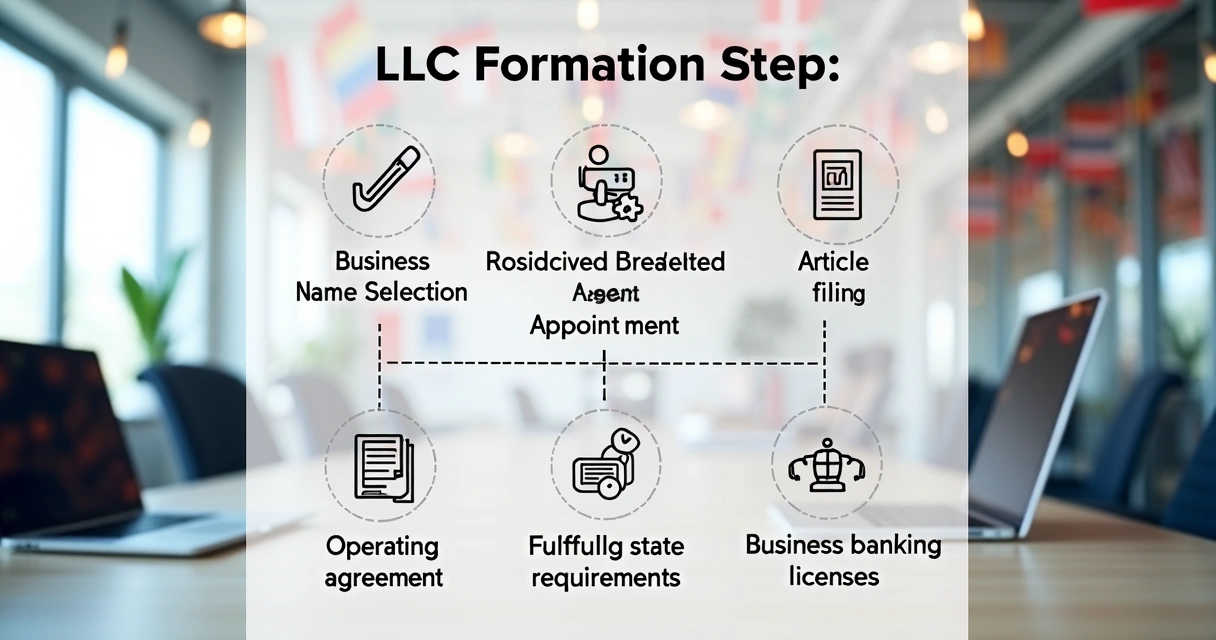
- Pick a US state: Each state has its own filing fees and regulations. Delaware and Wyoming are favorites for remote business, but choose based on where you plan to do business—or where formation is most hassle-free for non-residents.
- Choose and reserve your business name: Make sure the name isn’t already taken in your chosen state, and that it ends with ‘LLC’ as required.
- Designate a registered agent: This is mandatory. You can hire a service or individual to receive legal mail on your company’s behalf. They must have a street address in the state.
- File the articles of organization: This step is mostly online. You’ll supply basic information and pay a state fee (rates vary, usually $50 to $500).
- Apply for your EIN: I found the process straightforward through the IRS (as detailed here), but if you don’t have a Social Security Number, you will need to fill out IRS Form SS-4 and may be asked for an Individual Taxpayer Identification Number (ITIN).
- Create your operating agreement: Even if it’s not required, this document keeps internal rules clear and is seen as a sign of professionalism by banks and investors.
- Fulfill state-specific requirements: These may include publishing a notice in a local newspaper or registering with the tax office.
- Open a US business bank account: You’ll need your company documents and EIN. Increasingly, fintech companies and some banks allow remote applications, though options can change and may require supporting documents like your ITIN.
- Register for needed business licenses: Depending on your industry and location, you may need permits—check with the Secretary of State or local agencies.
I found that each US state has its own quirks, so always double-check official state websites—or get some help from professional services like safeitin.com, especially if this is your first time dealing with these forms.
The critical role of the registered agent
Every LLC, including those owned by non-residents, must list a registered agent with a street address in the formation state. The agent’s job is to handle legal documents, such as lawsuits or compliance notices, and to forward them to you, wherever you are in the world.
Without a registered agent, your business cannot be formed or kept in good standing with state authorities.
It’s not a role you can take yourself from outside the US, so most people use a professional service for this—safeitin.com can facilitate this requirement and help with onward mail forwarding and compliance reminders.
Why is the EIN (Employer Identification Number) so important?
I quickly discovered that the EIN is like your LLC’s social security number for business—it is used by the IRS, banks, payment processors, and the federal government. It’s required to open a US bank account, file taxes, and in many cases, to apply for remote merchant accounts or virtual business services.
The IRS lets nonresidents apply for an EIN even without a Social Security Number. Their guidance—linked here—spells out the steps. You simply complete Form SS-4, and post or fax it to the IRS. Some agents can help you get this number faster.
While technically you can get an EIN for free, in my own journey I found it easier to use a professional service to avoid errors or long processing times. Some states want to see your EIN even before you can finish other registrations.
Do you need an ITIN to open a US business?
One common misunderstanding I ran into is whether you need a US ITIN (Individual Taxpayer Identification Number) just to form an LLC. In most cases, the answer is no: an ITIN is only required if you are liable to pay US taxes personally or need to file a US tax return and don’t have a Social Security Number. Otherwise, the EIN covers most business needs.
When it comes time to open a bank account or file taxes as a nonresident, having an ITIN will help. Safeitin.com can streamline this process, avoiding the need to send your physical passport and guiding you in dealing with IRS-compliant procedures. If you’re interested in nonresident documentation, I also recommend reading material on US documentation requirements.
Operating agreement: setting the rules
An operating agreement isn’t required by every state, but I found many banks and partners will want to see one. Think of it as the road map for your company—it defines how decisions are made, who does what, and how profits are handled.
A simple agreement is usually enough for single-owner LLCs, but for multi-owner businesses, it can spell out dispute rules, voting, and capital contributions. Keeping one on record shows the IRS and other authorities that you are acting professionally, not as a hobbyist.
Staying compliant: annual reports, licenses, and taxes
Your LLC isn’t a one-and-done affair. States require varying annual (or biennial) reports, often with a minor fee. Neglecting these filings can cause you to lose your company’s good standing, which means fines—or worse, the state dissolving your business.
You must also keep up with licenses for your business activity, often at both state and local levels. Always check if your trade or city has specific licensing requirements for entrepreneurs.
Don’t forget the IRS—if your LLC does any business in the US or with Americans, you may need to file a tax return. The IRS has special rules for foreign-owned businesses, and not all income is taxed the same way. For instance, according to IRS information, nonresident aliens generally aren’t subject to US self-employment tax on foreign-earned income, but US-source income usually is.
Taxation options: how the IRS will see your LLC
One area I’ve been asked about a lot is how LLCs pay taxes, especially for foreign owners. Here’s how I break it down from my research:
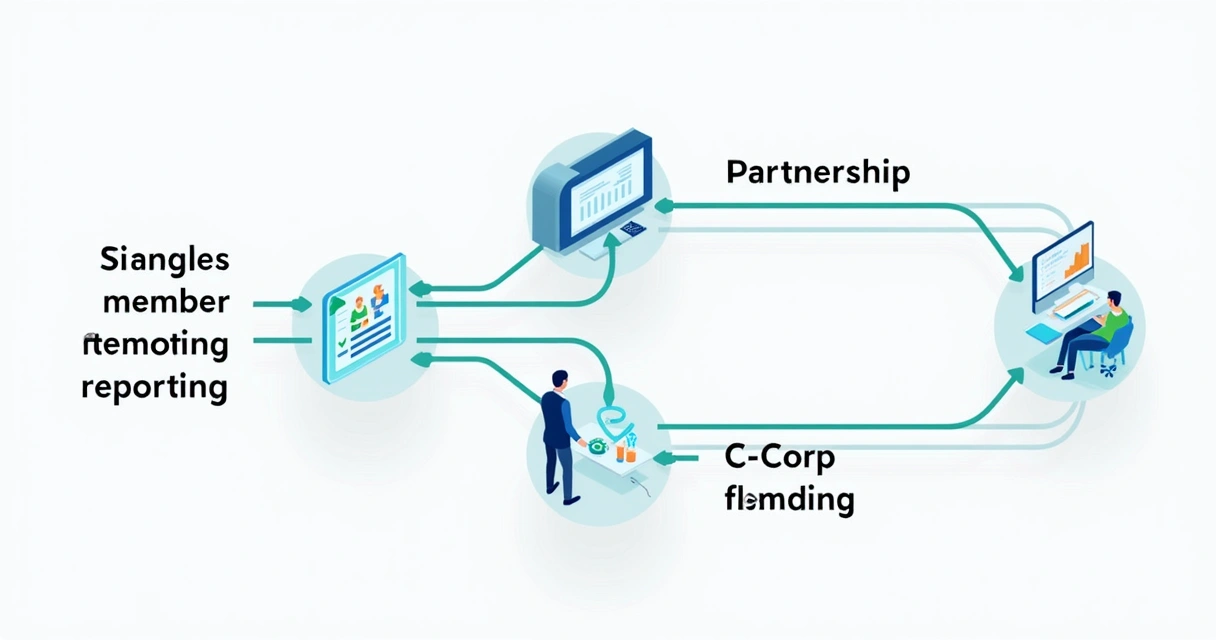
- Single-owner LLCs: By default, income “passes through” to the owner. You report profits and losses on your personal tax return using your ITIN (if needed).
- Multi-owner LLCs (Partnership): Profits pass to each owner, who then files accordingly.
- C-Corp Tax Election: You can ask for your LLC to be taxed like a regular corporation. This has benefits if you plan to keep profits in the company, but it means double-taxation (company pays, then you pay on dividends).
This flexibility lets you plan your business around where you live, your other companies, or even specific tax treaties your country may have with the US.
If this seems overwhelming, I found browsing the North American business structures category helpful to understand how taxes interact with LLCs and other models.
LLC vs corporation vs sole proprietorship: quick comparison
When I first started, I wondered why not just open a sole proprietorship or a regular corporation. Here’s what I found:
- LLC: Most flexible for non-residents. Limited liability. Pass-through or corporate tax options. Simple paperwork. No citizenship limits.
- Corporation (C-Corp/S-Corp): Strong liability protection, but S-Corp is not allowed for nonresident owners. C-Corp allows any number of shareholders but faces double taxation and stricter record-keeping.
- Sole proprietorship: Not really recommended for nonresidents. No limited liability, can be difficult to establish as a non-US person, no separation between the owner and business for legal issues.
For nonresidents, the LLC is almost always easier to set up and manage. If you want a deeper discussion on the trade-offs for international businesses, you can find storytelling and advice on classic North America business models.
Ongoing management: what to expect year to year
Once the formation excitement fades, ongoing inside management is straightforward. You’ll need to remember a few regular tasks:
- Paying your registered agent renewal fee
- Filing your annual report or franchise fee (requirements and costs depend on your chosen state)
- Maintaining accurate financial records for tax purposes
- Applying for business license renewals if your industry needs one
Most of these tasks can be handled online, often with friendly reminders or guidance from professional services. In my own LLC management, receiving automated email reminders about state filings has saved me from missing deadlines, and services like safeitin.com really make things easier by tracking dates for IRS forms or agent renewals.
Common challenges and solutions for non-US residents
There are hurdles, sure, but each has an answer:
- Bank account opening: Not all US banks are ready for foreign applicants online, but some fintech pathways or remote business bank services are increasingly available.
- Paperwork language: Most filings are in English and full of legal jargon. Services that specialize in assisting foreign applicants offer translated guides or step-by-step filling help.
- Getting an EIN or ITIN: The process can be time-consuming and full of mailing paperwork back and forth, but safeitin.com streamlines things and allows you to avoid sending passports by mail.
- Compliance: Losing track of state or IRS deadlines can bring fines. Online dashboards and regular notifications from service providers prevent costly mistakes.
- Complex tax rules: The IRS treats different income types in complex ways. With clear communication and guidance, most nonresident business owners are able to meet requirements and avoid stress.

When I faced these same obstacles, I found that going step-by-step and using support from IRS-compliant agents kept my business on track with minimal worry.
Cost to form and maintain an LLC as a nonresident
The price depends on your chosen state and service. Here’s what I generally encountered:
- State filing fees: usually $50 to $500 one-time
- Registered agent: $50 to $300 per year
- EIN application: free if you do it personally, but often bundled into a setup package for speed
- Annual reports or franchise taxes: $0 to $500+ each year, state-dependent
- Operating agreement: often free to write yourself, but $50 to $100 if you want help
Many people can fully set up and maintain their LLC remotely for less than $1,000 per year—but the time you save with professional support can be worth even more.
If you’re interested in lessons and tips from those who have already crossed these hurdles, don’t miss the related journeys on cross-border business formation experiences.
LLCs as a foundation for US credit and business reputation
If you ask me, one of the less appreciated benefits of an LLC is how it sets you up to become “visible” to the American financial system. US businesses and banks trust LLCs. Having an EIN lets you open a credit file, which is critical if you want to:
- Build US business credit
- Access lines of credit, loans, or payment gateways
- Rent office space, sign business contracts, or attract partners in the future
Even if you don’t plan to operate in the US right away, setting up an LLC now creates a positive track record and, over time, opens new professional doors.
Conclusion: why I recommend the LLC path for non-US entrepreneurs
If I had to sum up what I’ve learned, it’s this: the limited liability company offers unmatched flexibility, protection, and access for non-US residents wishing to participate in the US business world. Unlike other structures, you can start an LLC remotely, avoid unnecessary risk, and open up professional and financial options down the line—even if you live on the other side of the world. Modern tools and services, like those from safeitin.com, make it easier than ever.
If you’re ready to take your next step—whether that’s building credit, launching a global business, or simply planning for future opportunity—start your journey with safeitin.com. You’ll discover a process built for global mobility, compliance, and growth, without the paperwork headaches.
Frequently asked questions
What is a limited liability corporation?
A limited liability corporation is commonly used to describe a limited liability company (LLC), a US business structure that protects its owners’ personal assets from business debts and lawsuits. An LLC blends features of a corporation and a partnership, offering flexibility in management and taxation while providing liability protection.
How do non-US residents form an LLC?
Non-US residents can set up an LLC from abroad without a US address or visa. The steps include choosing a state, securing a unique business name, designating a registered agent, filing articles of organization, obtaining an Employer Identification Number (EIN) from the IRS, creating an operating agreement, and complying with state-specific requirements. Much of this process can be completed remotely via online forms or with the assistance of services tailored for international founders.
What are the benefits for non-US residents?
LLCs offer non-US residents clear separation between personal and business finances, limited liability protection, flexible tax choices, remote formation without residency requirements, access to the US market and banking system, and a way to build a professional US credit profile.
How much does it cost to start an LLC?
The cost varies depending on the formation state and services used. Typical expenses include a state filing fee ($50–$500), registered agent services ($50–$300 yearly), occasional legal or compliance help, and annual renewal fees ($0–$500+). Many nonresident owners establish LLCs for under $1,000 per year, but prices vary.
Is it worth forming an LLC in the USA?
For non-US entrepreneurs focused on entering the US market, protecting personal assets, or building international credit, forming an LLC is often the best available option. LLCs combine low barriers to entry with professional credibility and the ability to manage and scale business interests across borders.