My first encounter with the ITIN process was when a close friend, who was not living in the United States, wanted to start a business and begin building credit there. The process seemed confusing at first, but as I dove deeper, I unraveled how someone—anyone, really—can apply for an ITIN from abroad, entirely online. In this guide, I want to walk you through everything I’ve learned, step by step, to help you understand how you, too, can obtain your Individual Taxpayer Identification Number without mailing in your passport or standing in government lines.
Who needs an ITIN? The most common scenarios explained
Anyone who cannot get a Social Security Number but still has U.S. tax obligations or financial plans in the United States may need an ITIN.
In my experience, these are the main groups I’ve seen apply for an ITIN:
- Non-U.S. residents who receive U.S. income (such as rental property, investments, or business income).
- Foreign investors aiming to file U.S. taxes or open LLCs and bank accounts in the U.S.
- Spouses or children of U.S. taxpayers who are not eligible for an SSN but need to be listed on a tax return.
- International students who need to claim tax treaty benefits but do not qualify for an SSN.
- People looking to establish credit in the United States, even if they never step foot in the country.
The IRS clearly states that anyone required to file a tax return but not eligible for a Social Security number must use an ITIN on the form. That’s laid out in the U.S. taxpayer identification number requirement guide by the IRS.
Sometimes, I hear from individuals who simply want to open a U.S. brokerage account or hold a partnership share in an American company. In these cases, an ITIN is often the only way forward—and understanding how to get your ITIN number, especially remotely, removes a huge barrier for many.
The ITIN application process: how to apply online, step by step
When most people imagine applying for an official U.S. number, images of thick envelopes and long waits come to mind. This was the case years ago. Today, working with Certifying Acceptance Agents (CAAs) means I can help clients complete the process online, even without mailing documents or leaving their country. This is why safeitin.com focuses so much on remote, guided ITIN applications.
Understanding the move toward electronic ITIN applications
The IRS has modernized the ITIN application process. While mailing or appearing in person at select IRS offices is still common, using a CAA now offers a safe, guided, and fully remote approach. The IRS ITIN Acceptance Agent Program reveals how processing time is reduced with proper electronic submission—now often about 60 days instead of 120.
Certified Acceptance Agents can verify your identity and supporting documents themselves, so you do not need to risk sending your passport through the mail.
That is one of the key features of the service at safeitin.com—no mailing original documents around the world, no bureaucratic surprises, and expert support from start to finish.
Form W-7: how to fill it out without mistakes
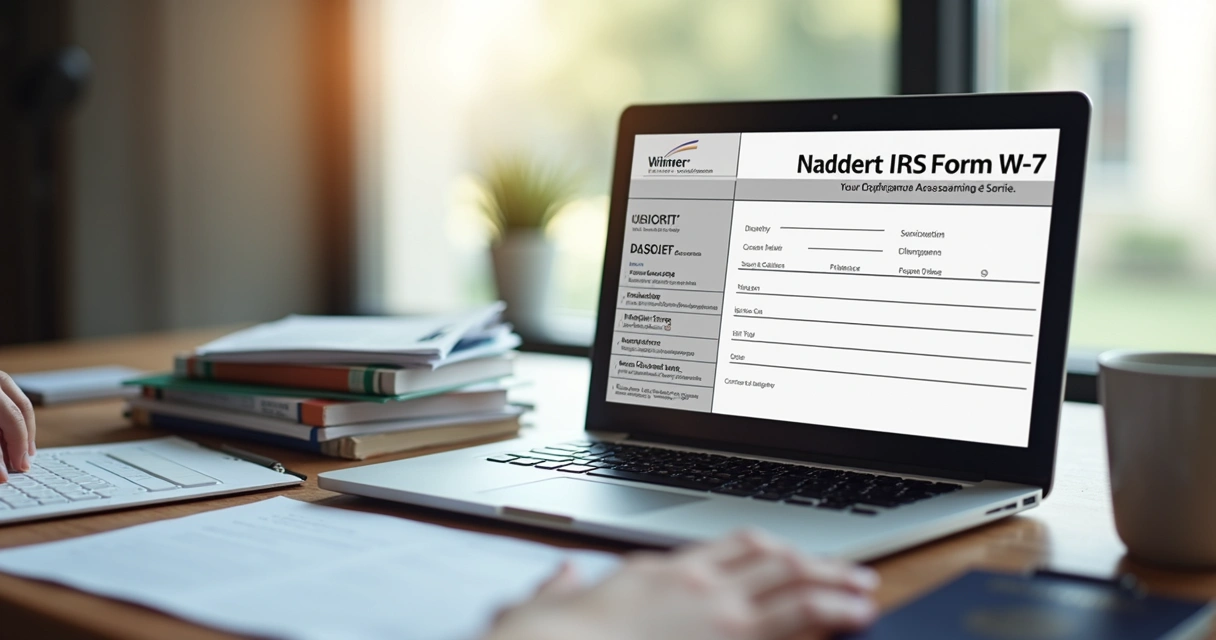
At the heart of your application is IRS Form W-7, which might look daunting the first time you see it.
I’ve filled it out many times, and these are the steps I follow:
- Personal information: Fill in your legal name, birth details, and current foreign address. Use the name exactly as it appears in your passport.
- Foreign status and identification: Indicate your country of citizenship. This connects with the identity documents you’ll be presenting.
- U.S. visa information: If you’ve ever held a U.S. visa, note the details—even if it is expired.
- Reason for applying: This is a critical area. The form lists multiple reasons, such as “Nonresident alien required to obtain ITIN to claim tax treaty benefit” or “Dependent/spouse of a nonresident alien visa holder.”
- Tax return or exception: Attach a federal tax return, unless you qualify under an IRS-listed exception. The IRS’s revised application standards explain the scenarios in which you still can get an ITIN without a tax return.
I cannot emphasize this enough: double-check every detail. Errors lead to delays or rejections.
Which supporting documents do you need for an ITIN?
When the IRS says “proof of identity and foreign status,” they usually mean a valid passport, but there are other allowed documents too. This is what I tell all my clients:
- Passport (valid and unexpired, covers both identity and foreign status)
- National identification card (must show photo, name, address, date of birth, and expiration date)
- Foreign birth certificate (mostly for dependents under 18)
- U.S. visa (if applicable)
- Other documents listed in the IRS application requirements
The easiest way for most is to use a valid passport, but if you do not have one, you can use a mix of documents that prove both your identity and your connection to a non-U.S. country.
What made safeitin.com stand out for me is the remote document verification by a Certifying Acceptance Agent. The CAA can review and certify your original documents using video calls and digital scans, following the practices described on ITIN guidance for applicants outside the U.S.. This makes the entire process possible from your home or office, anywhere in the world.
The benefits of using a Certifying Acceptance Agent
The IRS recognizes trained professionals, known as CAAs, who can authenticate identity documents and help applicants accurately complete their Form W-7. From what I have observed, these benefits matter most:
- No need to mail original documents to the IRS
- Certified ID verification over secure video call
- Experienced review reduces application errors
- Guided help with the tax return if needed
- Faster and safer process overall for non-residents
A CAA takes the “unknowns” out of the application process.
The Taxpayer Advocate Service notes that working with a CAA helps avoid the serious risks involved with mailing original identification documents, such as passports, across borders. To me, this is reason enough to consider a remote, agent-assisted application.
The online ITIN journey: detailed step-by-step walkthrough
I’m often asked, “But how do I actually go through the process online?” Here’s how I break it down with safeitin.com as a reference:
- Initial contact and eligibility check: You answer a few simple questions to confirm your need for an ITIN. Not everyone qualifies—if you need a Social Security Number instead, that’s a different process.
- Remote document review: You send digital copies of required documents securely. The CAA will verify these during a scheduled video call. No originals leave your hands.
- Form W-7 preparation: Together with the agent, you fill out Form W-7 and assemble supporting paperwork.
- Tax return (if needed): If a U.S. tax return is required with your ITIN application, the CAA will help you prepare it.
- Agent submission: The Certifying Acceptance Agent submits the full application package to the IRS electronically. You keep your original documents.
- Wait and notification: Processing times are usually 6 to 10 weeks. Some delays may occur during tax season or if the IRS requests more documents, as shown by recent IRS updates.
- Receive your ITIN: The IRS mails your new ITIN letter to the address you provided. Your agent notifies you as well.
Some people worry about handing over sensitive documents, but working with an authorized CAA like the ones at safeitin.com means strict security protocols are followed at each step.

What happens after you apply? Timeline and notifications
Waiting is the hardest part for many. Here’s what I typically see:
- The IRS acknowledges receipt within a few weeks
- The application is reviewed and processed—if more information is required, a letter (CP-566) is sent within 6-8 weeks
- For successful applications, the ITIN assignment letter (CP-565) is mailed within 10 weeks
- Processing may stretch longer during peak tax season or if the IRS requests clarifications
Applicants are never emailed their ITIN for security reasons—the number is provided via official mail and sometimes through the Certifying Acceptance Agent.
According to details in new ITIN acceptance agent program changes, electronic submissions, when complete, tend to move faster than traditional mail-in applications.
Special cases: renewals, dependents, and changes to SSN
There are a few “what ifs” I hear often. Here’s what I share with those in these special categories:
If you need to renew an expiring ITIN
ITINs that have not been used on a tax return in the last three years—or were assigned before 2013—may need renewal before filing again. You use the same Form W-7, but tick the “Renewal” box. Document requirements are similar, but you usually do not need to send a tax return with the renewal.
Adding dependents
If you are claiming dependents, each dependent must have their own ITIN. For children, you may be asked for a birth certificate, school records, or other proof of U.S. residency if you want specific tax credits.
Switching to a Social Security Number
If you ever become eligible for a Social Security Number, your ITIN becomes obsolete. You must notify the IRS and stop using the ITIN for new returns—this prevents double identity issues or refund delays.
I have found the topic of dependents and renewal well explained on safeitin.com’s documentation blog section. It’s a great resource if you want to go deeper, especially into child application details.
Understanding the ITIN’s role (and limits) in U.S. life
To avoid confusion, let’s be clear: An ITIN is a tax processing number only—it does not authorize you to work in the U.S., receive Social Security benefits, or change your immigration status. IRS guidance makes this distinction very clear: the ITIN exists only to help people meet U.S. tax law requirements (revised application standards for ITINs).
But there are many valid uses:
- File U.S. tax returns from anywhere on the globe
- Receive tax treaty benefits if eligible
- Open U.S. bank accounts or financial products (some require ITIN instead of SSN)
- Start a business or LLC in the U.S.
- Be legally listed as a dependent or spouse on another person’s U.S. tax filing
- Build a credit history if you move to or invest in America
Tax preparers and agents know: the ITIN is a gateway to the American tax and credit system for those without an SSN. But it is not a work permit or path to legal immigration status.
If you’re unsure about what you can do with your ITIN, the section on North America topics on safeitin.com’s blog gives great real-world examples.
Common mistakes and my favorite tips for a successful application
After years of helping with ITINs, these are the top pitfalls I watch out for:
- Submitting expired or incorrectly certified documents
- Leaving fields incomplete on Form W-7 (particularly middle names, which should be blank if none)
- Using inconsistent addresses—your mailing address must be reachable for months
- Forgetting to attach a required tax return or exception proof, as IRS guidelines on ITINs specify
- Trying to apply for dependents who don’t meet IRS rules, like non-U.S. resident children not claimed for tax credits
Always review your complete ITIN application with an impartial eye—missing or mismatched documents are the biggest cause of IRS rejections.
My best tip? If you’re at all uncertain, get advice before you submit. I often point clients to the practical application walkthroughs at safeitin.com’s blog for real-life “how I did it” stories. These are full of small yet helpful details that make the difference between approval and months of waiting.
Where to get help if you’re stuck or have questions
Sometimes you’ll need an extra hand—and that’s exactly why I appreciate services like safeitin.com. If you need U.S. tax return help, have an unusual documentation situation, or are unsure whether you need to file a return with your application, a personalized support route is always better than guessing.
You can also check the short guides at safeitin.com blog examples or the longer tax-specific articles at safeitin.com’s post library. These cover everything from dependents to renewals to opening U.S. accounts.
A well-prepared ITIN application saves weeks—or months—of delay.
Conclusion: Unlock your American goals—simply and safely
After guiding dozens through the ITIN application, my strongest advice is to avoid guesswork or shortcuts. If you want to start building credit, invest, or launch a venture in the U.S., getting your ITIN online is usually the fastest, safest, and most reliable way in.
Safeitin.com is designed for this exact purpose: to cut away paperwork confusion and give you a guided, remote application process—no mailing originals, no long waits, and always with human guidance.
I invite you to get to know our simple, straightforward approach—reach out today to begin your application and take the first step toward your goals in the United States.
Frequently asked questions
What is an ITIN number?
An ITIN (Individual Taxpayer Identification Number) is a nine-digit number issued by the IRS to people who need a U.S. taxpayer ID but are not eligible for a Social Security Number. It helps non-residents, foreign investors, and dependents file U.S. taxes or open financial accounts. The ITIN is only for tax purposes and does not confer work authorization or change immigration status.
How do I apply for an ITIN online?
The most secure method is by working with a Certifying Acceptance Agent (CAA), like the partners at safeitin.com. The full process includes remote document review, video verification, online completion of Form W-7, and digital submission to the IRS. No physical documents need to be mailed. For individuals applying from abroad, this eliminates the risk and hassle of mailing passports or traveling to the U.S.
How long does it take to get an ITIN?
The average processing time for a complete, correct application is 6 to 10 weeks, though this can be longer during IRS peak season or if the IRS requests more information. With electronic, agent-assisted applications, timeframes have improved, as outlined in the latest IRS program update.
What documents are needed for an ITIN?
Most applicants use a valid, unexpired passport as the main document, which covers both identity and foreign status. If you do not have a passport, you can present a combination of supporting documents such as a birth certificate, national ID card, or U.S. visa. Each document must meet the IRS’s specific requirements, and using a CAA ensures everything is reviewed and certified correctly.
Can I renew my ITIN online?
Yes, renewal can be handled online through a CAA. The process is similar to a first-time application, but you tick the “Renewal” box on Form W-7 and generally do not need a new tax return. All required identity documents are re-verified remotely, with no need to mail originals. Updated details are sent directly to the IRS for re-activation.