Let me be honest: opening a US bank account can feel confusing, especially if you don’t live in the United States or have a Social Security Number. When I first explored this idea, I was flooded with questions. Was this even allowed? Did I need to visit the US in person? What documents would I need, and how would an ITIN come into play?
After going through this step myself, researching extensively, talking with IRS-authorized agents, and seeing how solutions like safeitin.com have changed the process, I’m sharing a clear roadmap. This article is for people like me—people who may not be US residents, have no visa, and might be working or investing internationally, but need access to the US banking system.
What is an ITIN and why does it matter for banking?
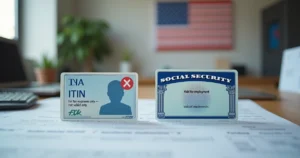
At its core, an Individual Taxpayer Identification Number (ITIN) is a nine-digit number issued by the IRS. It’s written in the format 9XX-XX-XXXX and always starts with a “9”. The IRS describes ITINs as a solution for people who need a US taxpayer identification number but aren’t eligible for a Social Security Number (SSN).
Getting an ITIN doesn’t change your immigration status, and it isn’t proof of work authorization in the US. Instead, it’s for tax returns and other financial documents required under US law—which includes many bank account applications.
ITIN bridges the gap for non-residents who need a US tax identifier.
From my experience, many banks will accept an ITIN in place of an SSN, especially for international clients or foreign entrepreneurs who don’t live in the US. You might need it if you’re planning to invest, open a business, or manage international payments. It’s not just about taxes anymore; it’s about financial access. If you want to dig deeper into ITIN basics, I found the IRS Internal Revenue Manual helpful for understanding who qualifies and the structure of the number.
When does the ITIN replace a Social Security Number for banks?
Not everyone needs a Social Security Number. In my research, I discovered that banks have made the process more flexible due to growing demand from international clients. If you’re not eligible for an SSN—perhaps because you’re not a resident or citizen—the ITIN often steps in as your official identifier for US banking purposes.
You’ll have to provide your ITIN, usually during the account application. Some banks will ask for additional proof, but generally, the ITIN works as a direct substitute for an SSN in most banking situations, especially when the purpose is tax reporting or regulatory compliance.
Some situations where you’d use an ITIN over an SSN:
- You are not eligible for an SSN, but you need to file US tax returns
- You want to receive payments or royalties from US sources
- You are opening a business account as a non-US resident
It’s important to remember that some banks still have their own rules, so you may need to check policies. But safeitin.com and many IRS-authorized agents can help ensure your documentation will match what banks expect.
Do you need to be in the US or have a visa?
One myth I hear all the time is, “You have to travel to the US or hold an American visa to get a bank account.” That’s not true.
You can open a US bank account with an ITIN without any American visa or physical presence. As long as you can provide proper identification and complete the bank’s verification process, you are eligible—even if you never set foot in the US.
In my own journey, I did everything from my home country. This was possible because of the way the ITIN process is now designed to be remote and flexible. If you also want a remote path, I suggest you work with an IRS-authorized acceptance agent. They can process your ITIN and certify your documents fully online.
Step-by-step guide: Opening a US bank account with an ITIN
I’ll break down the steps based on my research and what worked practically for me:
1. Make sure you have your ITIN
This is the golden key. If you need an ITIN—for example, if you haven’t already applied—the first step is to get one. There are several ways to do that, but I found working with an IRS-authorized agent, like through safeitin.com, was by far the smoothest.
2. Gather required documents
Banks want to know who you are, that you are real, and how to report your financial activity to the IRS. I’ve seen that most US banks ask for this information from non-residents:
- Proof of identity (passport copy, national ID, or similar document)
- ITIN letter or card from the IRS
- Proof of address (can often be a bill, statement, or rental agreement—even if outside the US)
- Valid email and phone number
- Any company documents (if opening a business account)
Requirements can change, but this is the standard list. Safeitin.com can help you figure out which documents are needed for personal versus business accounts, too.
3. Choose between remote and in-person account opening
Some banks will let you open an account fully online, while others might require you to visit a branch. From what I’ve seen, the remote process is gaining popularity. All my documents were submitted digitally, and my ID verification was done by video chat.
Remote account opening is often faster and more comfortable for non-residents.
When comparing both methods, the digital route means less paperwork and no travel. However, the bank may take a bit longer to approve your application due to additional verification steps.

4. Submit your application
This is where you’ll provide your documents, ITIN, and answer the bank’s questions about how you plan to use the account. Be honest and transparent—banks care about compliance. A clear application is less likely to get held up.
5. Wait for verification and approval
Banks will compare your submitted documents with databases and may reach out if they need anything clarified. This usually takes from one to three weeks. If you’re working with an IRS-acceptance agent or a service like safeitin.com, support is available in case you hit a snag.
Patience is key, but double-checking documents makes everything faster.
6. Set up online banking and start using your account
Once approved, you’ll get online access. You can now send and receive payments, set up wires, link the account to services like PayPal, and even start building US credit (if your bank offers a credit card).
How to get your ITIN: The application process
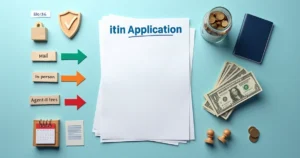
For people just starting, getting an ITIN for bank account applications is often the trickiest part. Here’s a summary of the current process, as outlined on the IRS’s ITIN portal:
- Submit a completed Form W-7 to the IRS
- Include supporting documents proving your identity and foreign status (passport is most common, but birth certificate, national ID, or driver’s license are sometimes used)
- If you work with an IRS-authorized acceptance agent, they can verify your originals and submit your application for you—this avoids sending your physical passport to the IRS
An ITIN only needs to be renewed if it has expired—valid ones stay with you for life. I found the agent route (like GNOSE GROUP LLC’s process on safeitin.com) simpler; I didn’t risk losing my passport in the mail and had support throughout.
How to work with IRS-authorized acceptance agents remotely
Acceptance agents are IRS partners assigned to verify your identity and prepare paperwork. According to IRS Return Preparer Office statistics, there are now over 67,000 enrolled agents and hundreds more authorized preparers, making it much easier to work fully online.
Remote authorization is a game-changer: most agents now accept scanned documents and offer live video verifications. That means you can keep your passport and prove your ID without mailing it away for months. My remote experience was efficient, with agents walking me through the entire form.
If you’re interested in more about document procedures and related paperwork, you might find the documentation tips on this link helpful.
What documents do banks ask for from non-residents?
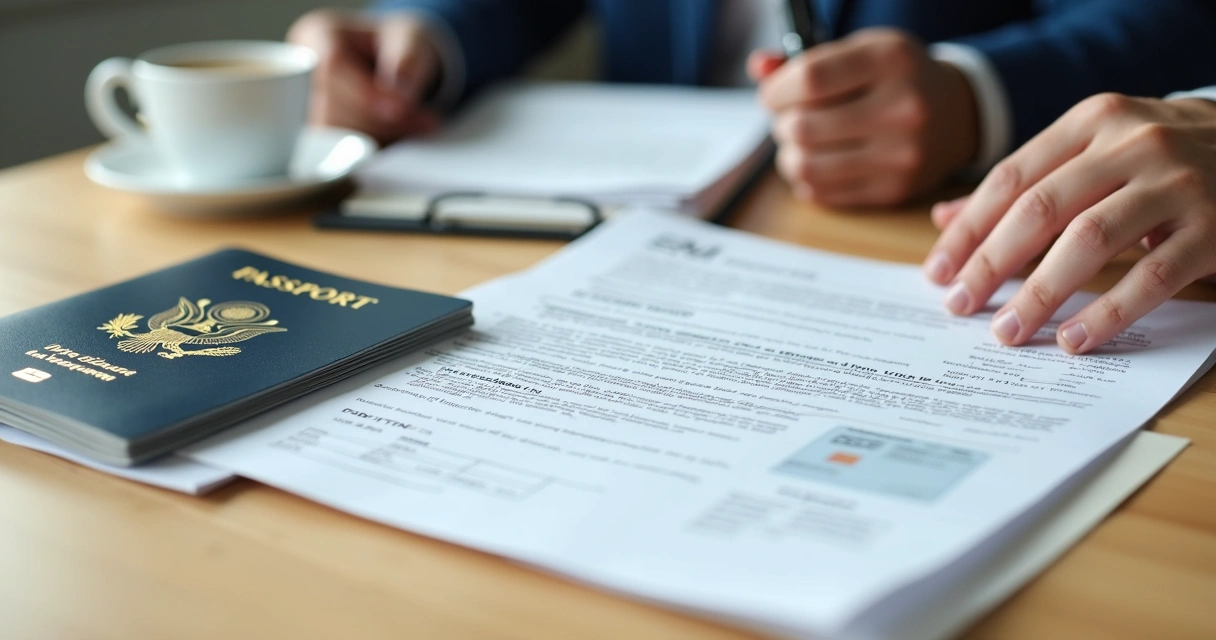
It took me a few phone calls and some email exchanges to get clarity here. For non-US residents, bank compliance departments are especially careful about verifying your identity and your address. In my case and from people I’ve helped, the bank always asked for a valid, government-issued photo ID, a proof of address, and a formal IRS letter or card showing the ITIN.
Some banks ask for even more:
- Proof of business registration (for business accounts)
- Tax documents or filings (past or upcoming, depending on bank)
- Letters of reference from your home bank
It’s smart to always confirm which documents are needed before you begin. The faster you submit complete and legible documents, the smoother your account opening will be.
Remote versus in-person application: A comparison
When I tried the remote route, I noticed a few clear advantages:
- No flights, hotels, or travel costs
- All documents submitted online
- Support from agents via chat, phone, or video
- Quicker fixes for document errors (instead of mailing corrections)
The traditional in-person option is still there, but for those outside the US—or anyone short on time—digital is the way to go. This is where the model used by safeitin.com makes a difference, ensuring 100% remote guidance and paperwork.
How long does the process take?
Based on my experience and feedback from the community, here’s a typical timeline:
- ITIN application (via remote agents): 4-8 weeks
- Bank account application (remote): 1-3 weeks
You might get approvals faster if your documents are clear and you respond to requests quickly. Using a streamlined service, like safeitin.com, helps to track your application and avoid common delays.
How to build credit and use your ITIN for more financial opportunities
Having a US bank account and ITIN opens a lot of doors. If you plan to apply for US loans or credit cards in the future, your bank may allow you to use your ITIN as the reporting ID for credit bureaus.
I started with a simple checking account, then got a small secured credit card using my ITIN, which helped me establish a US credit history. Paying on time and using the account for regular transactions are the first building blocks. For more about building credit, I recommend the tips on this guide for credit growth.
Use your ITIN to build a US credit profile and unlock new possibilities.
It’s also worth mentioning: an account helps with US investments, real estate, freelance payments, or sending money to and from American friends or clients. If you need strategies for expanding your business or opening a US company remotely, you can check more tips at this section about North America entrepreneurship.
Common misconceptions and practical tips
There is so much misinformation about ITINs and US banking. In my own search, I found a few myths that I’d like to clear up here:
- Myth: “ITINs are only for people living in the United States.” Fact: You can use an ITIN from anywhere in the world. This is even explained by the IRS Tax Topic guide.
- Myth: “Only big businesses can open accounts remotely with an ITIN.” Fact: Individuals, freelancers, and small companies do it, too.
- Myth: “The process is risky or unreliable.” Fact: If you work with licensed agents and follow legal guidance, the process is safe and legal. You don’t have to risk your passport or deal with unclear middlemen.
If you want to see real examples, reviews, or success stories, this post and another case here offer first-hand perspectives. I found these stories reassuring when looking for a transparent, remote approach.
Useful tips for a smooth approval
- Double-check all forms for accuracy before submitting
- Use a recent utility bill or bank statement for proof of address (make sure it’s translated if in a foreign language)
- Keep copies of all your documents and application receipts
- Respond quickly to any questions or verification requests from your bank or ITIN agent
- Consider opening the account with a minimum deposit to start—even a small amount helps show activity
Don’t be afraid to ask for help. There are real people dedicated to helping international clients through these steps. That made a big difference for me, especially when forms felt overwhelming.
Conclusion: Your new financial beginning in the US
If you’ve made it this far, you now know that opening a US bank account as a non-resident—with just an ITIN—is not only possible, but manageable and often surprisingly smooth. Whether you’re an entrepreneur, investor, freelancer, or individual looking to build opportunity, your ITIN is the gateway.
The world of US finance is open to you, no matter where you live.
If you want the simplest, safest, and most reliable way to get your ITIN for banking or business, safeitin.com provides a 100% remote, guided process with authorized support from start to finish. Start your journey to US financial access today and experience what’s possible—entirely online, with expert guidance every step along the way.
Frequently asked questions
What is an ITIN for a bank account?
An ITIN is a unique nine-digit tax ID number issued by the IRS for people who need to report US taxes but aren’t eligible for a Social Security Number. For banking, it acts as your main identifier if you don’t have an SSN, making it possible to open accounts, receive payments, and comply with tax regulations—all without living in the US. You can read more at the IRS official ITIN guidance.
How can I open a bank account with ITIN?
Gather your ITIN and identity documents, then choose a bank that accepts ITIN applicants and follow their application process. You’ll need to provide proof of identity, proof of address, and usually your ITIN letter. Many banks now allow remote, online account opening—no travel or visa necessary.
Which banks accept ITIN for accounts?
Most major US banks and several smaller institutions accept ITINs as an alternative to SSNs for both personal and business accounts. Eligibility and requirements can vary, so review what each bank asks for. Using services like safeitin.com or working with IRS-authorized agents makes matching the right bank to your needs much easier.
Is it safe to use ITIN for banking?
Using an ITIN for banking is safe as long as you apply through legitimate channels and keep your information private. The IRS and banks are strict about security. Only provide your ITIN to trusted, authorized institutions or agents.
Can non-residents use ITIN to bank?
Yes, non-residents can use an ITIN to open US bank accounts and access other financial services. You do not need to live in the US, hold a US visa, or have citizenship. The ITIN is recognized for tax and compliance reasons, giving you the same banking opportunities as local residents when it comes to identification.