
Starting a business in the United States has always fascinated people worldwide, and for non-residents, the digital economy makes it more accessible than ever. Over the years, I have seen entrepreneurs from every continent move beyond borders using the right tools and numbers—specifically, a combination of an LLC, an Individual Taxpayer Identification Number, and related compliance paperwork. Knowing how to properly use an LLC ITIN number can transform your ambitions into a real, sustainable business.
Understanding basic U.S. identification numbers
If you want to form an LLC as a non-resident, you must first know the purpose of three numbers: ITIN, EIN, and SSN. These numbers, sometimes confusing at first glance, unlock the world of compliance, taxation, and banking in the United States. I’ve seen many aspiring business owners pause here; let’s clear the fog.
SSN is for citizens and residents. ITIN and EIN help non-residents start their U.S. business journey.
What is an ITIN?
The Individual Taxpayer Identification Number (ITIN) is a 9-digit number issued by the IRS to individuals who need U.S. tax reporting recognition but are not eligible for a Social Security Number. The IRS clearly states that ITINs are for federal tax purposes only, they do not authorize work or give Social Security benefits (IRS.gov ITIN guidance). In my experience, the ITIN is the bridge for non-residents to pay taxes, file returns, and interact with U.S. institutions.
What is an EIN?
The Employer Identification Number (EIN) is a unique number used to identify business entities in the U.S. It’s required to form an LLC, open a business bank account, and pay payroll or federal taxes. According to the IRS, non-resident owners typically need an EIN for their LLCs, whether or not they plan to work or reside in the U.S. (IRS.gov Guidance for TINs). I’ve found applying for an EIN smoother once you know exactly which forms and documents to prepare.
What is an SSN and why is it different?
SSN stands for Social Security Number, and is generally reserved for U.S. citizens and permanent residents. Non-residents do not qualify unless they secure permission to work in the U.S. In essence, if you’re reading this to start a company without moving to the U.S. or getting a visa, SSN is not the path.
When do non-residents need an ITIN or an EIN?
If you want to open a U.S. LLC as a non-resident, you almost always need an EIN for the business, and you likely need an ITIN as the owner or shareholder. These serve different purposes. EIN is for the company. ITIN is for your personal tax relationship with the IRS when you’re not eligible for an SSN.
-
An EIN is necessary to register your LLC, open a business bank account, hire employees, file employer tax returns, and more.
-
An ITIN is required if you are a non-resident owner who needs to file a personal U.S. tax return, receive payments subject to IRS withholding, or claim tax treaty benefits.
I have often seen clients try to skip the ITIN, not realizing that income distributions and some types of accounts still require it, especially when dealing with IRS withholding and tax reporting obligations.
Step-by-step process for obtaining an ITIN online
Technology has changed the game for ITIN applications. Years ago, I watched clients struggle with mailing original passports or even traveling for an IRS agent meeting. Now, with systems like safeitin.com, the process is smoother and you don’t need to be physically present or send your passport by mail.
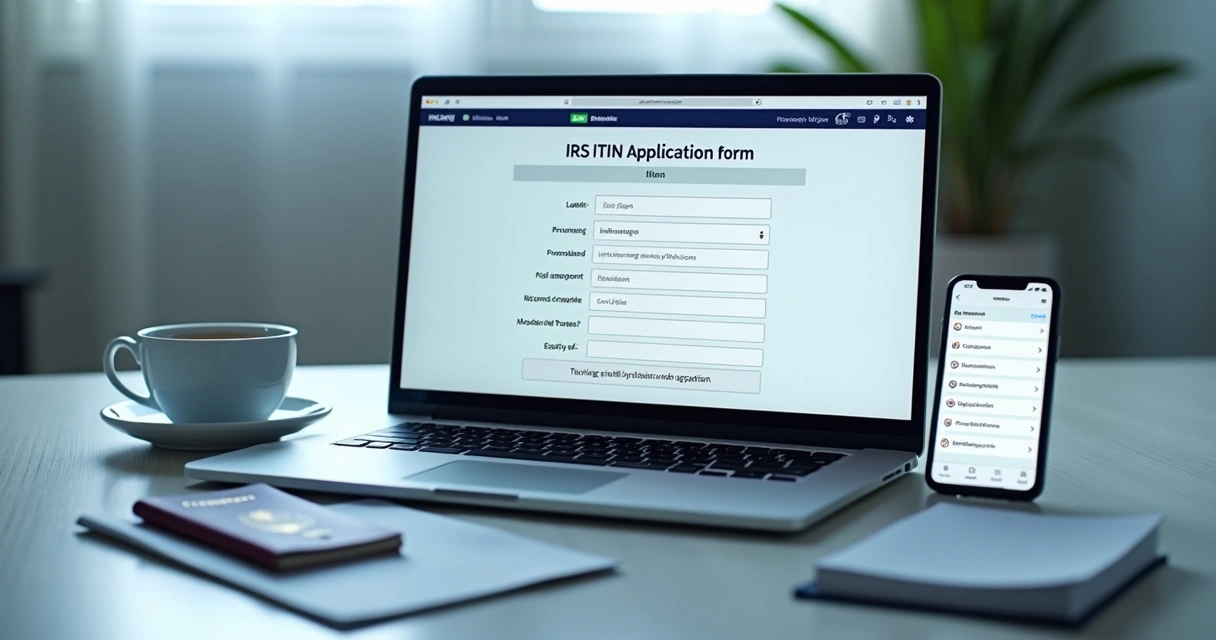
What you need to apply for an ITIN
To apply online, here’s what I always recommend you prepare, based on my work with clients and current IRS process:
- Valid passport information (no need to ship the physical passport with safeitin.com’s agent support)
- Completed IRS W-7 form, with correct boxes ticked for your situation
- Supporting documents showing the need for an ITIN (for example, an EIN letter, LLC formation documents, or tax reporting requirement letters)
- Proof of foreign status and identity (usually the passport photo page; sometimes government-issued IDs if needed)
The IRS allows ITIN applications through Certifying Acceptance Agents (CAA)—a key feature of safeitin.com’s process. The IRS-authorized agent checks your documents, verifies your identity remotely, and ensures paperwork is correct. In many cases, all communication happens online; you never have to mail your passport.
What to expect in terms of timeline and costs
From my experience, the ITIN process through a good agent can take between 2 and 8 weeks. The agent’s help is especially valuable when you want to avoid mistakes that delay approvals. I’ve seen IRS backlogs and rejections from missing information; a clear process really helps prevent frustration.
Who needs an ITIN in the LLC process?
If you are a member or owner of an LLC and do not have an SSN, you likely need an ITIN if:
- You expect to receive income from your LLC and must report it on a U.S. tax return.
- Your name appears on company tax filings as a responsible party.
- You need to claim tax treaty benefits to reduce withholding rates.
The ITIN is not always required immediately, but sooner or later, for compliance, tax filings, or banking, you’ll need it. I always urge clients to apply early rather than wait for the IRS to ask.
Forming a U.S. LLC as a non-resident: the full process
Setting up an LLC remotely continues to get easier each year. The whole process can be done from your home country with the right guidance. Here’s how it usually works, step by step.
Select your state and company name
Your first decision is where to form your LLC. Some states, like Delaware and Wyoming, have special rules for privacy and taxation, but your choice can depend on your business style. The name search is also an early step—your name must be unique in the state system.

Prepare and file the LLC articles
You need to file the “Articles of Organization” (sometimes called “Certificate of Formation”) with the state. This is usually done online, with help available to ensure the documents meet both state rules and IRS requirements. It’s common to provide your address, even if it’s outside the U.S.—the registered agent’s office becomes your company’s U.S. address.
Appoint a registered agent
Every LLC needs a registered agent, which is a person or company in the state who can receive official mail from authorities. Most states require the agent’s physical address to create your company. When using a remote service, the registered agent typically forwards important mail, such as legal notices or tax documents, to your email.
Get an EIN for your LLC
Once your LLC is formed, the next step is to apply for an EIN. The IRS allows business owners without SSNs or U.S. addresses to apply, using the ITIN in some cases, or simply stating they are foreign owners. The process requires submitting a Form SS-4 by fax or mail (sometimes by phone for international applicants).
Key things I have seen help with EIN approval:
- Use the correct responsible party name (this is you, the non-resident owner)
- Indicate you have no SSN but need an EIN for U.S. business
- Attach LLC Articles or formation proof, if required
Draft your operating agreement
Even if not required by law, an operating agreement clarifies how your LLC will be managed, profit distributions, and dispute resolution. Some banks ask for this document. From my perspective, having it upfront reduces confusion later, especially as your company grows or adds partners.
Open a business bank account
When your LLC and EIN are ready, you can set up business banking. This is an area where I often see non-residents hit a hurdle. U.S. banks typically request:
- LLC paperwork (Articles or Certificate)
- EIN letter from the IRS
- ITIN or passport of the owners/authorized signers
- Proof of non-U.S. address and sometimes a utility bill or lease agreement
Some banks may accept a remote application, but many ask for a personal visit. I advise preparing your documents and researching banks’ policies before applying. Some international banks with U.S. branches offer more flexibility, and sometimes a virtual address provider can forward mail.

Common challenges for non-residents and some ways to resolve them
As much as the digital world has made this process accessible, in my time advising clients, I saw recurring worries. Let’s go through the main ones and the most practical solutions I know.
- Opening a U.S. bank account: Expect a request for in-person verification or detailed documents. Try banks with international programs, or ask your agent for options.
- Building U.S. credit: Without an SSN, it’s not automatic. Some banks offer cards with an ITIN only. Regular use and payment of business expenses help build a profile over time.
- IRS forms and U.S. tax obligations: Make sure you understand the annual forms to file (e.g., 1040-NR for non-residents), state tax registration, and IRS withholding rules. Fines or penalties can result from missing annual filings.
- Ongoing compliance: Non-residents must still file state paperwork and annual reports where required. Mark renewal dates on your calendar and rely on email reminders from your agent.
If you want inspiration, stories from entrepreneurs who formed remote companies show that careful planning makes all the difference.
Tips for staying compliant with IRS and state requirements
Non-residents who run an LLC from abroad still act as the “responsible party” for tax and reporting. I recommend the following tips for ongoing compliance, based on real-world mistakes I’ve helped resolve:
- Track LLC renewal deadlines and file annual reports to prevent administrative dissolutions.
- Keep your ITIN and EIN active by filing taxes every year, even if your company makes no profit yet.
- When hiring or opening accounts, always use the correct numbers for the transaction.
- Check your state’s rules for sales tax, franchise tax, or special licenses required for your business activity.
- If something seems unclear, search the complete documentation resources we publish to help clarify tricky regulations.
Most of all, keep copies of every document submitted and received. I have seen processes move much faster when the paperwork is organized and available.
How can safeitin.com help with your LLC and ITIN needs?
Throughout the years, I’ve watched as entrepreneurs stumbled over paperwork, rules, and IRS websites. What makes safeitin.com unique is the combination of digital guidance, personalized service, and complete privacy—especially for remote founders.
With our process, you receive:
- 100% remote LLC formation, without needing a U.S. visit or visa
- IRS authorized agent support, so you don’t mail your passport for ITIN
- Personalized help at each step, with affordable prices
- Guidance from company formation to compliance, always in English
This approach helps you stay focused on business growth rather than paperwork. If you want to see specific success stories, I recommend reading about digital business expansion on our North America category or some detailed business guides, like this in-depth discussion on compliance.
For entrepreneurs who want something even deeper, some unusual tips and real case examples are shared in special stories about starting a U.S. business abroad.
Conclusion: Your roadmap to a U.S. business as a non-resident
Starting a U.S. company as a non-resident is realistic—even if you never set foot in the United States, step into a local bank, or hold a visa. The key is to have your paperwork right: form your LLC with a registered agent, get an EIN, secure your ITIN for tax purposes, and keep records tidy.
With guides, resources, and personal support at safeitin.com, your ambition to grow in the U.S. market is free from bureaucracy. If you’re serious about doing business right, reach out today to see just how smooth it can be to obtain your LLC ITIN number and launch your company, fully online. I look forward to seeing your venture thrive on American soil, wherever you call home.
Frequently asked questions
What is an ITIN number for LLC?
An ITIN (Individual Taxpayer Identification Number) is a number assigned by the IRS to individuals needing a U.S. taxpayer ID for federal tax purposes, often used by non-resident LLC owners who do not qualify for an SSN. This enables you to report your share of LLC income on U.S. tax filings and meet IRS rules. The ITIN is not issued for business purposes but connects your personal identity with the IRS for tax and reporting.
How do non-residents get an ITIN?
Non-residents can get an ITIN by applying through the IRS using Form W-7, either by working with an IRS-authorized Certifying Acceptance Agent remotely or by mailing the application and supporting documents. Trusted platforms like safeitin.com partner with certified agents to verify documents online, meaning you do not need to mail in your original passport.
Can I open an LLC without ITIN?
Yes, you can form an LLC and get an EIN even if you don’t have an ITIN, but the ITIN is often required later for tax filings and distributions. If you plan to receive income or need to file a U.S. tax return as the owner, you’ll need the ITIN for compliance.
How much does an ITIN number cost?
The IRS itself does not charge a fee for the ITIN number, but services that help prepare, verify, and submit your documents—like certified agents or online platforms— typically charge reasonable fees for guidance and identity verification. These services help avoid mistakes and speed up approval.
Is an ITIN enough to start a business?
No, an ITIN is just one part of the process. To start a U.S. business, you must also form your LLC with the state and get an EIN from the IRS for your company. The ITIN handles your personal taxes; the EIN handles business matters. Both numbers work together for non-residents managing a U.S. company.